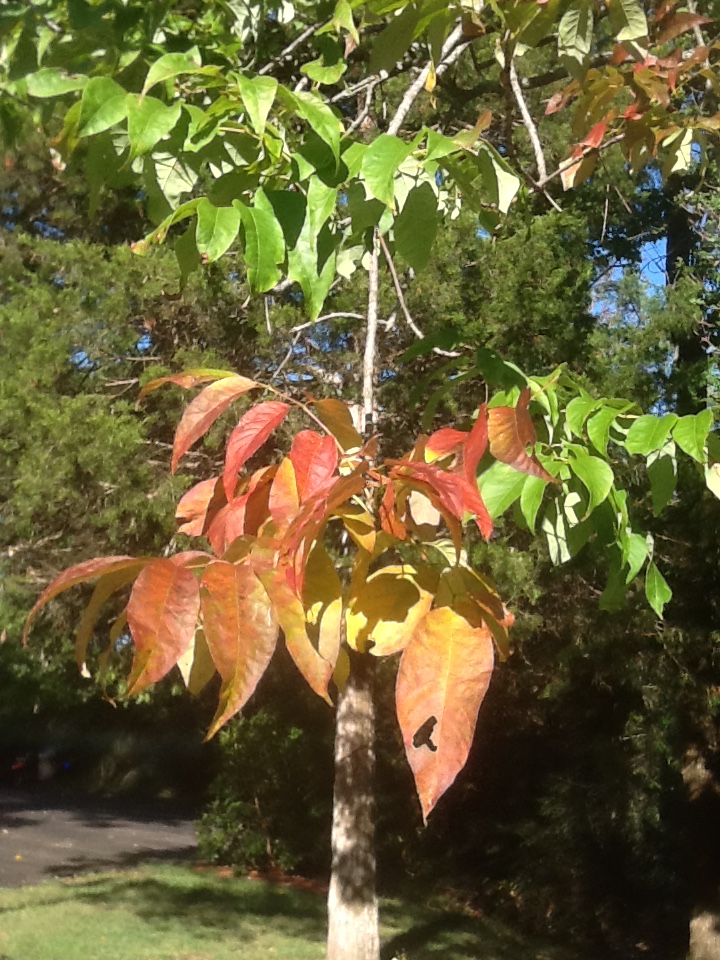
Ash Trees – the November 2015 Tree of the Month

ash_treeby Ann Farnham

Ash trees are ubiquitous in our town because they can grow almost anywhere; they may have been over-planted because of this robustness. They populate our yards, streets, golf courses, parks and woodlands. Exceptional as shade trees, they tolerate all kinds of conditions, and have beautiful fall foliage. These medium–to-fast growing trees range from Nova Scotia and Manitoba in the north and to North Florida and Texas in the south.

There are many species of Ash; our most common are White Ash (Fraxinus americana), and Green Ash (Fraxinus pennsylvanica). These two species are challenging to differentiate but suffer the same problems shared with all the Ashes: many fungal diseases and insect predation. Importantly, the recently introduced Emerald Ash Borer is emerging as the most serious pest afflicting Ash trees today. The White Ash in its native habitat is primarily a forest tree while Green Ash is mainly a riparian species.

Both species have compound leaves (usually 5 to 7 leaflets per leaf) which measure 8-15” long, arranged opposite each other on a stem. They are dark green in summer and the fall foliage ranges from bright yellow to maroon and deep purple. The bark is grey to grey-brown and mature trees have a furrowed, narrowly ridged diamond shaped texture. The flowers, which appear before the leaves in spring, are inconspicuous. The fruit, known as samaras, are profuse, flat, and measure 1” to 2” long.

Ash wood is dense and white. It is used for baseball bats, furniture, tool handles, and flooring, among other things which require strength and resilience.

emerald_ash_borer

Debbie Miller, USDA Forest Service, Bugwood.org

This fine and useful tree, however, seems doomed. The invasive Emerald Ash Borer (EAB) is killing ash trees throughout the North America in huge numbers. Many municipalities are taking down trees preventatively and at this time many thousands of these trees have been preemptively cut down or died from the EAB, which seems impossible to eliminate. The EAB was first introduced in Michigan from Asia in 2002 and has now migrated to the east coast. It has been spreading in Pennsylvania for the last few years and last year was found in New Jersey.

Green_ash_killed_by_Emerald_Ash_BorerA recent survey, conducted by Rutgers’ Urban Forestry Program found more than 840 Ash trees growing on Ewing public land within 10’ from sidewalks and trails alone. It is predicted that the Ash tree loss in Ewing will be enormous.

For more information and details about this pest, please check out our Emerald Ash Borer page.

The Ewing Environmental Commission welcomes suggestions for Trees and other Topics from all Ewing residents. To email suggestions or questions email us at eec@ewingnj.org.

To calculate the value that trees add to your property, go to treebenefits.com/calculator.

Do It Yourself Fall Planting: A Short Course

treeplantingtotm

By Ann Farnham, LLA

Why plant trees in the fall? Among the reasons, consider that fall temperatures are more moderate than summer, rainfall is steadier, and it is easier to work outside on the cooler days. The trees in question are less likely to go through heat or drought shock and will have an opportunity to establish some root growth before winter. Inventory at nurseries and garden centers might be reduced in price as the company will not want the expense of overwintering the stock (beware, however, that you do not buy the leftovers, less desirable plants from the earlier season!). In this area, plan to plant your tree from early September to, ideally, 6 weeks before the expected first heavy frost, around the end of October or early November.

Inform yourself thoroughly before buying your tree. Is the exposure (sun, shade, wind direction) of your chosen site correct for this plant? Are the soil type and pH what the plant requires? Concrete walls. patios, and walkways, for example, can make the soil pH more alkaline than the surrounding area. Most trees do well in a pH between 5.5 and 6.5; evergreens and broad-leaved evergreens prefer some acidity in the soil. Is the drainage adequate? Be sure to check this. Dig an 18” test hole to see how long it takes for water to drain out of it. If it takes more than over night, you will need professional help to improve the drainage.

Are there buried utilities in that spot? Walls and fences might create a microclimate which will be too warm for your plant of choice. The soil at this planting time should have a temperature over 55º at 6“ deep. Take a soil sample for analysis; our local extension service will do this. Be sure that your downspouts do not drain into the site and that there is adequate room for the mature tree. Check the tree for bugs, broken or diseased limbs, a dried-out root ball or container, or “wobble” from the root ball or container, which indicates stem breakage or damage. Is the tree “root bound”? That is, are the roots in the container so crowded –from being too long in that sized container- that they encircle the inside of the container? Do roots come out of the drainage holes? This condition requires extra measures or another plant.

Once you’ve checked out all of this and for further instructions, look for planting details, drawings, and plant lists at our Fall Planting page.

The Ewing Environmental Commission welcomes suggestions for the Tree Topics from all Ewing residents. Email suggestions or questions to eec@ewingnj.org.

To calculate the value that trees add to your property, go to treebenefits.com/calculator/

By ewinggreenteam Posted in trees

Tree Lilac – July Tree of the Month

by Ann Farnham

treelilacThe beautiful tree (or large shrub) chosen by the Ewing Township Environmental Commission this month is a native of Eastern Asia and was introduced to the United States in 1876. It is hardy to USDA zones 4-7A (Ewing is zone 6b) and now has a range from the northeastern United States to eastern Washington, Oregon, and California south to northern Texas.

Among the trees which bloom in June and July, the Tree Lilac, Syringa reticulata) becomes covered in heavily scented, showy, creamy white flowers in 6-10” panicles which last about two weeks. The leaves are dark green, but develop no fall color. They are arranged opposite on the stems, have an oval shape, and a smooth edge. The bark is reddish-brown. This tree/shrub is available as a single-trunked or multi-trunked plant.

These trees can reach 20-30’ in height, and 15-25’ in spread. The branches are stiff and spreading and become arching with time. The habit is upright.

This is said to be the most trouble-free lilac; it has a few minor diseases or insects to worry about, but the pest list is not short. It is, however, resistant to mildew, scale and borers. A favorable site and good maintenance usually keep trouble under control.

The Tree Lilac prefers loose, well-drained, slightly acid soil, and full sun. Good air circulation and cool summers are helpful, but it is said to be fairly tolerant of air pollution and other adverse conditions. The tree can be “rejuvenated” by being cut to the ground and allowed to start over.

This is a fine specimen tree in the garden, and it is very effective in groups or near buildings. Its relatively small size and medium growth rate have also made it a useful street tree under overhead wires.

Flowering Dogwood – June Tree of the Month

cornusflorida

by Ann Farnham, LLA

Ewing Township’s Environmental Commission recognizes the beautiful Flowering Dogwood, Cornus Florida, as the Tree of the Month.

This lovely tree, a native to the eastern and central United States, is hardy from USDA zones 5-9 (Ewing is zone 6b), from Massachusetts to Florida and west to Texas.

Among the first trees to bloom in April or May, the Flowering Dogwood becomes covered in greenish-white, bloom-like bracts, four in number, which are usually 3-4” wide. The bloom period lasts up to two weeks and is followed by clusters of red, berry-like, drupes which turn scarlet in September. Birds love them.

These trees reach 20-30 feet in height, are beautiful in flower and have outstanding summer and fall foliage. This species produces brilliant white flowers, but there are varieties ranging from pale pink to warm red.

Flowering Dogwoods do best in acid, well-drained soil, and partial shade, although they will tolerate full sun with appropriate care. They are, unfortunately, subject to insect and disease problems. In the Northeast the most widely recognized scourge is a fungus, Anthracnose, which is difficult to control and slowly kills the tree. Fungicides may be effective.

Dr. Elwin Orton of Rutgers University has developed hybrids of Cornus Florida and Cornus kousa (Japanese dogwood), which are disease resistant and now commercially available.

Some straight species of Flowering Dogwoods which have shown resistance to Anthracnose have been selected and bred and are also now available at nurseries and garden centers.

The Ewing Environmental Commission (eec@ewingnj.org) welcomes suggestions for the Tree of the Month from all Ewing residents.