Christmas Trees – December Trees of the Month

christmastreeby Ann Farnham, LLA

Among the pleasures we enjoy in December is choosing a Christmas tree. The choices are many: the firs (Douglas Fir, Fraser Fir, Balsam Fir), pines (Scotch, Eastern White), red cedars, and spruce (Colorado Blue, Norway, Concolor). Throughout the United States there are more than 35 different evergreen species grown for the holidays. They are available either cut, in containers, or balled and burlapped.

If you choose to purchase a cut tree, try to prevent the cut section of the trunk from being exposed to the air for more than three to six hours; it should be put into a container with water as soon as possible. Next, trim off the lowest branches which might interfere with the tree’s staying upright in a stand, and then remove ragged branch tips or unattractive branches. Saw off an inch of the trunk so the tree can absorb water freely, and fasten it to its stand, which should contain plenty of water. The water, especially at first, should be replenished often.

Artificial Christmas trees are often made of PVC, a dangerous chemical, which is not biodegradable, and does not have the wonderful fragrance of a real tree. However, they may be used for many years and are maintenance free.

A live tree, while somewhat more labor intensive to care for, may be planted in your yard after its holiday use, and enjoyed for years to come. You must do some planning before you take the tree home but it is well worth while. 1) Determine what spot on your property affords the correct exposure (full sun) and space. Check a good source or the internet to determine how much space your particular species of tree will require when mature. 2) Dig the hole NOW before the ground freezes. Digging a frozen hole is no fun. Make the hole approximately 2 times the width of what you expect the container or root ball will be. This is important; and do not dig the hole any deeper than the height of the container or root ball. Fill the hole with leaves or mulch as insulation, and cover the hole and the pile of soil with a tarp and more leaves or mulch to avoid freezing. Throw away whatever sod was dug up as you do not want it included in the backfill.

Your live tree should be indoors as briefly as possible; place it at first (in a waterproof tub or container) in a garage or porch to allow it to acclimate to warmer temperatures. Water it lightly and frequently, or place ice cubes over the root ball to keep the moisture levels up. Spraying the tree with an antidessicant such as Wiltproof will help control moisture loss through the needles.

When the tree is ready for planting, roll it into the hole and orient it so that its best side faces your house or the street. If the hole is too deep, add soil into the bottom and compact it until it is the right depth. Remove as much of the burlap around the root ball as possible; if it is in a container, remove the container. If it is in a wire basket, cut off as much of the basket as you can. Then, begin to backfill with the soil you set aside. Water it thoroughly and slowly as you fill the hole; this will push out air pockets and saturate the sides of the hole as well as the back fill.

It is not necessary to stake or guy the tree. Cover the area – to the drip-line- with 2-3” of double-shredded, hardwood bark mulch, keeping the mulch 2” away from the trunk. Water your Christmas tree every day for a week, twice the second week, and then once a week until the ground freezes and your hose becomes useless.

BEST WISHES FOR THE HOLIDAYS FROM YOUR EWING ENVIRONMENTAL COMMISSION!
Ash Trees – the November 2015 Tree of the Month

ash_treeby Ann Farnham

Ash trees are ubiquitous in our town because they can grow almost anywhere; they may have been over-planted because of this robustness. They populate our yards, streets, golf courses, parks and woodlands. Exceptional as shade trees, they tolerate all kinds of conditions, and have beautiful fall foliage. These medium–to-fast growing trees range from Nova Scotia and Manitoba in the north and to North Florida and Texas in the south.

There are many species of Ash; our most common are White Ash (Fraxinus americana), and Green Ash (Fraxinus pennsylvanica). These two species are challenging to differentiate but suffer the same problems shared with all the Ashes: many fungal diseases and insect predation. Importantly, the recently introduced Emerald Ash Borer is emerging as the most serious pest afflicting Ash trees today. The White Ash in its native habitat is primarily a forest tree while Green Ash is mainly a riparian species.

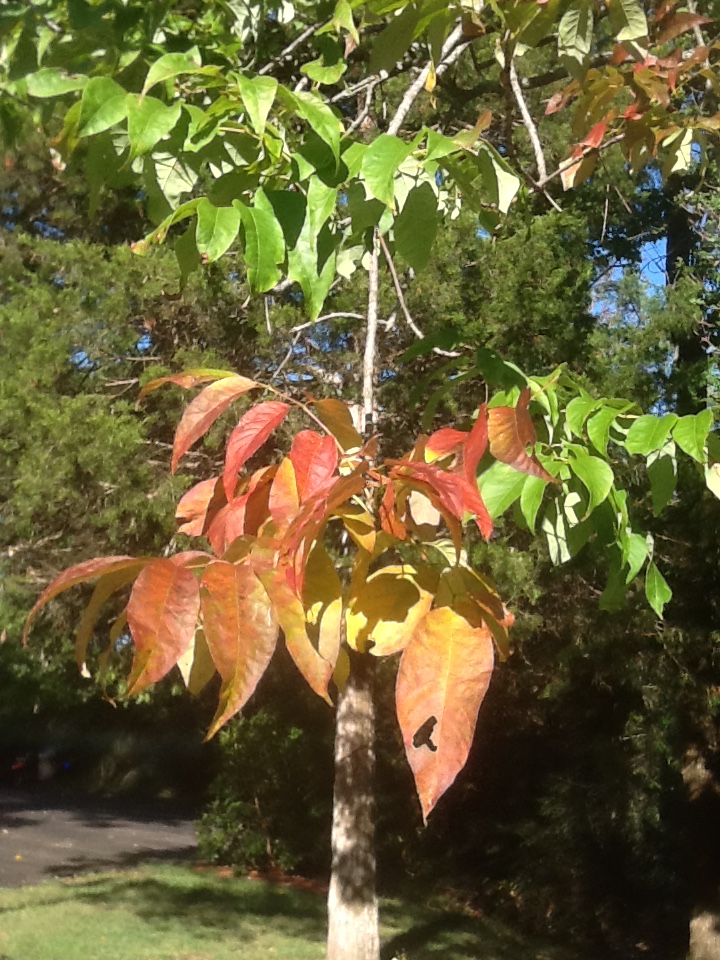
Both species have compound leaves (usually 5 to 7 leaflets per leaf) which measure 8-15” long, arranged opposite each other on a stem. They are dark green in summer and the fall foliage ranges from bright yellow to maroon and deep purple. The bark is grey to grey-brown and mature trees have a furrowed, narrowly ridged diamond shaped texture. The flowers, which appear before the leaves in spring, are inconspicuous. The fruit, known as samaras, are profuse, flat, and measure 1” to 2” long.

Ash wood is dense and white. It is used for baseball bats, furniture, tool handles, and flooring, among other things which require strength and resilience.

emerald_ash_borer

Debbie Miller, USDA Forest Service, Bugwood.org

This fine and useful tree, however, seems doomed. The invasive Emerald Ash Borer (EAB) is killing ash trees throughout the North America in huge numbers. Many municipalities are taking down trees preventatively and at this time many thousands of these trees have been preemptively cut down or died from the EAB, which seems impossible to eliminate. The EAB was first introduced in Michigan from Asia in 2002 and has now migrated to the east coast. It has been spreading in Pennsylvania for the last few years and last year was found in New Jersey.

Green_ash_killed_by_Emerald_Ash_BorerA recent survey, conducted by Rutgers’ Urban Forestry Program found more than 840 Ash trees growing on Ewing public land within 10’ from sidewalks and trails alone. It is predicted that the Ash tree loss in Ewing will be enormous.

For more information and details about this pest, please check out our Emerald Ash Borer page.

The Ewing Environmental Commission welcomes suggestions for Trees and other Topics from all Ewing residents. To email suggestions or questions email us at eec@ewingnj.org.

To calculate the value that trees add to your property, go to treebenefits.com/calculator.

The Ecological Benefits of the Not So Perfect Yard

autumnleavesby Joanne Mullowney

The annual autumn cleanup is almost upon us and the Ewing Environmental Commission suggests that you channel your inner Environmental Steward by leaf cycling. Hoarding your autumn leaf drop provides numerous benefits for your landscape. It provides raw materials for the compost pile and an insulating winter cover in the garden. It helps with soil building and moisture retention. And, not inconsequentially, it helps save taxpayer dollars by reducing the amount of resources our Township puts out for fall cleanup.  While you might think that this leaves the yard looking a little less than perfect, less labor may be required as we strive to become Leaf Litter Bugs.

The somewhat messy yard contributes yet another important benefit – habitat for the wild creatures that share our landscapes. Did you know that despite its not so perfect look, leaf litter provides an important foraging space for a wide variety of birds, small mammals and insects? The untrimmed winter garden invites insects to reside in native grasses or settle in hollow plant stems; while birds feed from dried seed heads.

So how do you balance a desire to have a not-so-messy yard (and not irritate the neighbors) with the needs of the interconnected web of creatures that provide biodiversity in your garden? Well, you don’t have to let your whole garden go wild; you can start out small. Just leave a section or two untrimmed or start in the backyard. Or settle some leaves under the branches of your shrubs.

I use a combination of methods. I rake out some of the leaves from the beds that are simply too overwhelming onto the lawn. I then take my mulching mower and chop them up into small pieces. (Yes, using gas mowers is considered an unsustainable gardening practice, but consider the greater good.) Rake up the chopped leaves and place them back in the garden around shrubs and plants. Not surprisingly, they are greatly reduced in volume and contribute to a more manicured look. Do this as needed until the end of the season and the leaves will break down over the winter providing your soil with valuable nutrients all the while enhancing habitat.

Set yourself a goal of gardening more sustainably while trying to reach a balance between aesthetics and respecting the natural processes occurring in the landscape. After all, Mother Nature doesn’t have anyone carting out leaves to the curb. Our world desperately needs more environmental stewards, eco-gardeners working in harmony with nature and conserving natural resources. We ask you to become a litter bug; a Leaf Litter Bug, that is.

Do It Yourself Fall Planting: A Short Course

treeplantingtotm

By Ann Farnham, LLA

Why plant trees in the fall? Among the reasons, consider that fall temperatures are more moderate than summer, rainfall is steadier, and it is easier to work outside on the cooler days. The trees in question are less likely to go through heat or drought shock and will have an opportunity to establish some root growth before winter. Inventory at nurseries and garden centers might be reduced in price as the company will not want the expense of overwintering the stock (beware, however, that you do not buy the leftovers, less desirable plants from the earlier season!). In this area, plan to plant your tree from early September to, ideally, 6 weeks before the expected first heavy frost, around the end of October or early November.

Inform yourself thoroughly before buying your tree. Is the exposure (sun, shade, wind direction) of your chosen site correct for this plant? Are the soil type and pH what the plant requires? Concrete walls. patios, and walkways, for example, can make the soil pH more alkaline than the surrounding area. Most trees do well in a pH between 5.5 and 6.5; evergreens and broad-leaved evergreens prefer some acidity in the soil. Is the drainage adequate? Be sure to check this. Dig an 18” test hole to see how long it takes for water to drain out of it. If it takes more than over night, you will need professional help to improve the drainage.

Are there buried utilities in that spot? Walls and fences might create a microclimate which will be too warm for your plant of choice. The soil at this planting time should have a temperature over 55º at 6“ deep. Take a soil sample for analysis; our local extension service will do this. Be sure that your downspouts do not drain into the site and that there is adequate room for the mature tree. Check the tree for bugs, broken or diseased limbs, a dried-out root ball or container, or “wobble” from the root ball or container, which indicates stem breakage or damage. Is the tree “root bound”? That is, are the roots in the container so crowded –from being too long in that sized container- that they encircle the inside of the container? Do roots come out of the drainage holes? This condition requires extra measures or another plant.

Once you’ve checked out all of this and for further instructions, look for planting details, drawings, and plant lists at our Fall Planting page.

The Ewing Environmental Commission welcomes suggestions for the Tree Topics from all Ewing residents. Email suggestions or questions to eec@ewingnj.org.

To calculate the value that trees add to your property, go to treebenefits.com/calculator/

By ewinggreenteam Posted in trees

Monarch Butterflies Overhead

by Bruce Black

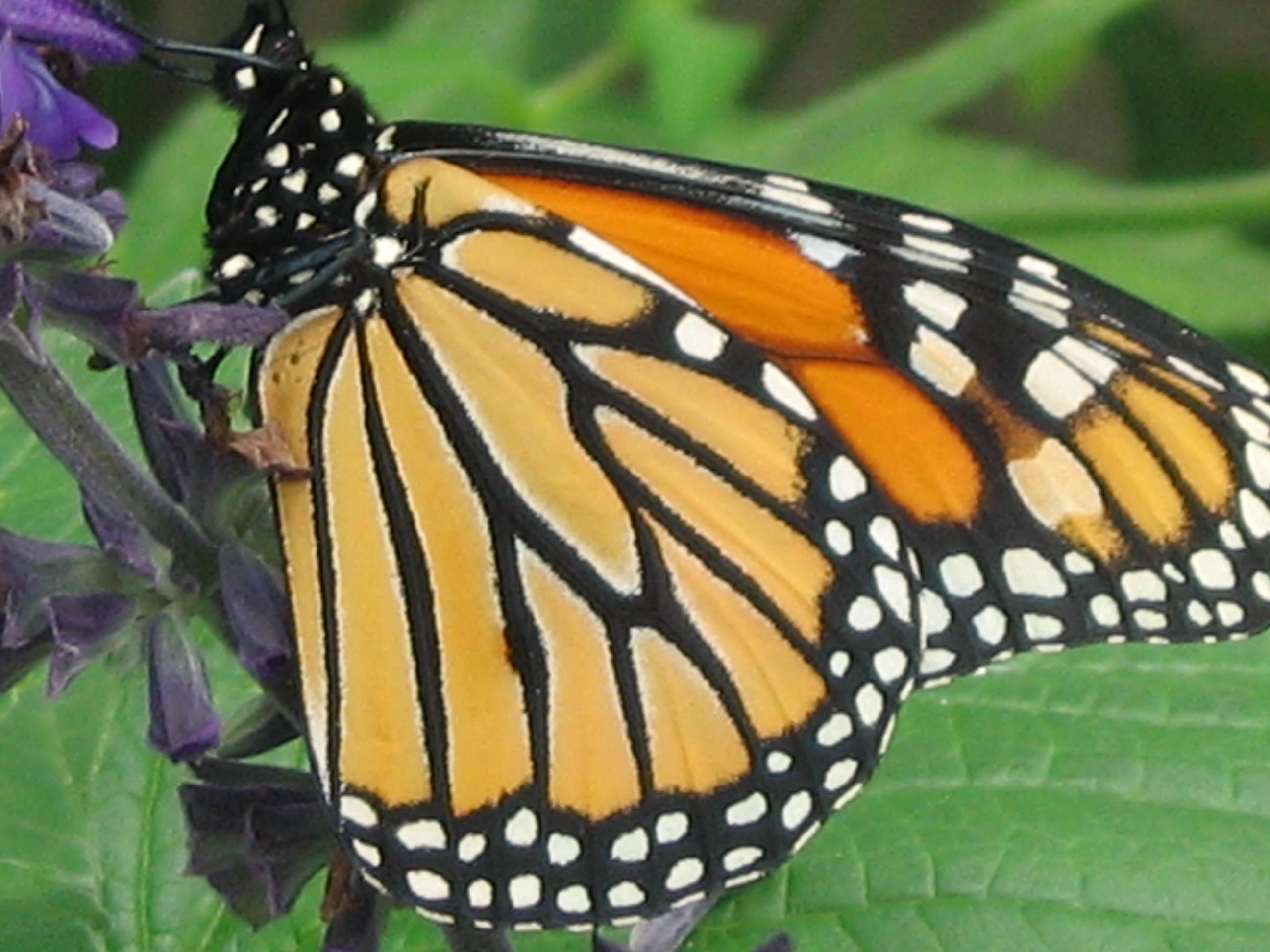
d2664-1We are now mid-to-late season during the fall Monarch migration. Monarch butterflies are travelling about 50-100 miles a day as they migrate from the northeast down to Florida, the Gulf States and Mexico. While some of these Monarchs may end up in the central Mexico wintering grounds, most of our local Monarchs overwinter in Florida and along the Gulf Coast.

During colonial times, Monarchs were not mentioned in the largely forested northeast. The first observations of Monarchs here seem to be related to the deforestation of this area for farming. Indeed, migration on the East Coast differs from migration on the West Coast in several aspects, and seems to have arisen during Colonial times.

Western Monarchs, for example, enter diapause (stop breeding) during the fall migration when most migrate into Mexico, where they form massive aggregations of millions of butterflies. There are some overwintering sites in California, but those in Mexico seem to be the most important. These diapausing Monarchs become darker during their fall migration before acquiring the striking orange color during Spring migration. In contrast, eastern Monarchs do not breed during fall migration. Upon reaching their wintering grounds they will breed all winter long.

During migration Monarchs typically feed prior to their morning flight, and then fly nearly nonstop until 4-6 PM when they stop flying to search for food and overnight refuge.

Members of the Goldenrod family, and many fall Asters, are important nectar plants during fall migration. In the late afternoon, meadows overgrown with Goldenrod and Joe Pye weed are good places to look for these beautiful insects.

While Milkweed is a critical larval food source, the importance of this plant during fall migration is minimal since the Monarchs are not breeding and the plant has already flowered prior to the main migration. By contrast, Milkweeds are critical during Spring migration because the Monarchs need to replicate 3-4 cycles as they migrate to the Northeast.

Adult lifespan during the Spring is only a few weeks, while during Fall migration longevity is measured in months. Beyond expanding the range for Monarchs, migration is likely to be beneficial for them.

One of the most serious diseases of Monarchs is a protozoa parasite found in all Monarch populations and is transmitted from female to larva. High infection may result in shorter lifespans, decreased fitness and decreased fecundity. Infected butterflies are “culled” during migration resulting in a decrease of infection incidence. In the non-migratory southern populations (Florida, Gulf States) the disease incidence is as high as 70%, while eastern migratory populations have disease rates below 7%.

Bird predation may also impact Monarch populations. Monarchs are chemically “protected” due to the sequestering of the cardiotoxin, atropine, found in their larval food source. Birds eating a Monarch immediately retch until the butterfly is voided. On the other hand, Monarchs can also use Spurges (milky sapped plants) as larval food sources that may have little or no atropine. Consequently, these butterflies are unprotected. Some birds have learned to taste the butterfly wing scales to gauge the amount of atropine the butterfly contains. If it has a low atropine, the butterfly is eaten.

During your walks, you may notice Monarchs with beak bites on their wings. Rest assured that these butterflies are carrying atropine.

While butterflies are certainly not facing extinction, migration of the American population is a threatened phenomenon. Most significantly for our eastern butterflies is the loss of Milkweed stands to support and sustain the spring migration. Ewing has relatively few stands of Milkweed today, which is creating a food desert for these insects. Next Spring consider planting Milkweeds in your yards to help attract and sustain the lovely butterflies. If you’re lucky you might get to enjoy a most lovely caterpillar!

Nuclear Power’s Place in an Uncertain Energy and Changing Climate World

by Joe Mirabella

iStock_000055421440MediumFor millennium no one knew how the sun worked. Then in 1905 Albert Einstein discovered that energy and mass were interchangeable with his famous formula, energy equals mass times the speed of light squared (E=MC2). In other words, a little mass can give a whole lot of energy. In the 1930’s it was discovered that if you bombard Uranium 235 with neutrons you create a chain reaction which can unleash that energy. This led to the development of the atomic bomb in WWII.

In 1955 the navy developed the first nuclear powered submarine. That technology was developed to generate electricity that is now operating approximately 430 nuclear power plants in the world, around 100 in the U.S. generating around 20% of our electricity. However, starting in the 60’s and 70’s, concern developed regarding the safety of these nuclear plants and the long term disposal of highly radioactive nuclear waste. The nuclear accidents at 3 Mile Island, Chernobyl and Fukushima and the failure establish a long term nuclear waste depository at Yucca Mountain, Nevada has rightfully fed into these legitimate concerns.

However alarms over the environmental effects of global warming resulting from massive CO2 emissions have led some environmentalist to reevaluate the relative dangers of nuclear power. Nuclear power plants emit no CO2 or any air pollution. Estimates vary but air pollution from burning fossil fuels for electricity kills around 1.5 million people a year worldwide from stokes, heart disease, COPD, cancers, asthma and other diseases (WHO). Coal is a particularly destructive source of energy not just from air pollution but from mining and disposal of millions of tons of toxic coal ash.

The Chernobyl accident accounts for all documented deaths from all nuclear accidents at around 78. Long term increased cancers from low level radiation spread from Chernobyl and Fukushima (none from 3 Mile Island) are difficult to measure and estimates vary widely from zero to thousands spread over decades but nowhere near that from burning fossil fuels.

All nuclear power plants are not the same. The Chernobyl reactor was a terrible, dangerous design that no longer exists and the Fukushima plant had major serious design flaws that could not handle the tsunami that struck it. Modern existing designs are far safer and more efficient and there are many advanced experimental designs that would eclipse even those. Fusion nuclear reactors promise unlimited clean energy from seawater with no nuclear waste and no possibility of a nuclear accident.

Long term storage of nuclear waste does not yet exist but existing intermediate term storage in concrete and steel silos could provide indefinite safe storage. Radioactive decay continuously reduces the dangers that these wastes pose. Existing and advanced nuclear reactor designs could use nuclear waste as fuel to greatly reduce or eliminate radioactive waste.

In conclusion: Nuclear energy has its risks that need to be evaluated seriously but its 60 year record is far less environmentally dangerous and destructive than burning fossil fuels. Existing nuclear power plants should be kept in operation and modernized whenever possible. New nuclear power plants may not be financially viable, at least in the short run, because of the current abundance of cheap natural gas unless there is a carbon tax or carbon credits. Later in this century fusion power may provide mankind with unlimited clean and safe energy but until then energy conservation, improved efficiency and renewable energies like solar are always the best way to go.

This is an overview of a presentation given by the Ewing Environmental Commission’s Joe Mirabella. For more information and to arrange for a presentation contact him at ewingec@gmail.com. Look for the slide show with presentation highlights coming soon.

Pawpaw – September Tree of the Month

pawpaw

Troy Evans, Great Smoky Mountains National Park, Bugwood.org

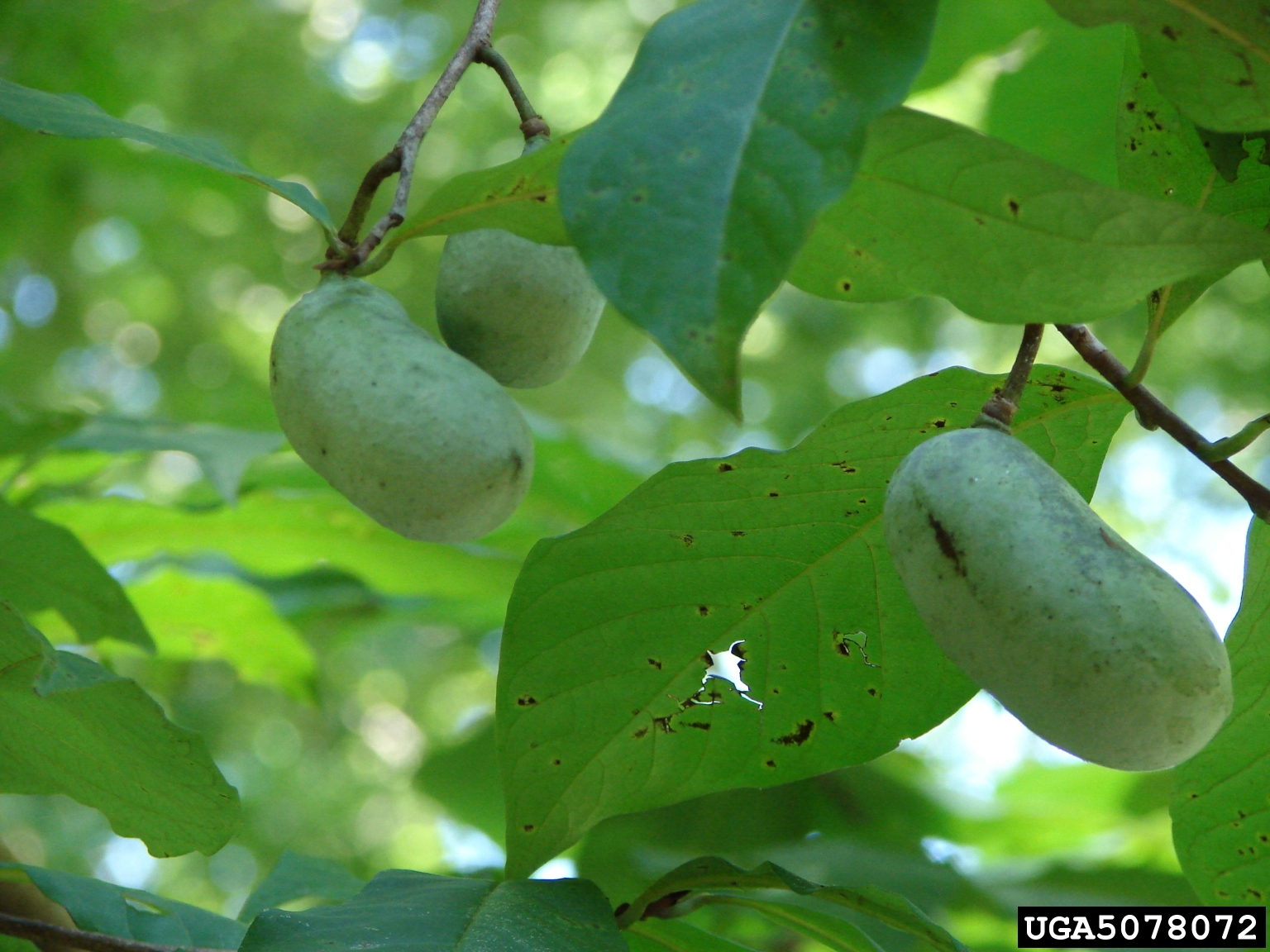
This native tree has the largest edible fruit native to the U.S. Pawpaw (Asimina triloba) known as “wild banana,” or “prairie banana,” derives its name from the Spanish, “Papaya.” It has almost no insect or disease pests.

An endangered species in New Jersey (threatened in New York), it is native to the East, South and Midwest. First mentioned by the Spaniard deSoto while on expedition, he found Native Americans growing it in the East. It was a favorite dessert of George Washington, and Thomas Jefferson planted it at Monticello and shipped seeds to France.

Pawpaw has a pale, custard-like fruit with spoonable flesh and easily removed black seeds. Usually eaten raw and chilled, it tastes similar to a mixture of banana, mango, cantaloupe and cherimoya. High in antioxidants and fatty acids, it is supposed to have more nutrient value than apples and peaches, and more protein than bananas, apples and oranges. Once picked the fruit spoils quickly, so it does not ship well and is usually found only at farmer’s markets. It is also used in ice cream, pancakes and juices. It is especially revered in Southeastern Ohio.

The fruit, with colors from yellow-green to brown, matures from mid-August to October and is up to 2-6” long and 1-3” wide. It is eaten by raccoons, foxes, opossums and squirrels, but seldom by deer or rabbits.

Pawpaw is not self-pollinating. Growers often use a brush to pollinate the flowers to ensure a good crop, or spray them with something smelly, like fish emulsion, to attract pollinating insects. The leaves, twigs and bark have a disagreeable odor and contain a natural insecticide, “acetogenin,” which probably contributes to the pollination difficulties. The larvae of the native Zebra Swallowtail butterfly ( dark, striped caterpillars), eat Pawpaw leaves as their only food.

Pawpaw’s alternate leaves, which are among the last to appear in the spring, cluster symmetrically at the ends of branches. The delicate leaves are 10-12” long and 4-5” wide, dark green above and lighter below, and prefer non-windy areas.

The flowers are 1-2” across, bloom in March through May, with colors ranging from red to purple to maroon.

The tree, which prefers full sun after the first few years, grows naturally in patches, spreading mainly by root suckers as an understory tree in well drained, fertile and shady bottomlands or floodplains.

Ann Farnham, Licensed Landscape Architect

The Ewing Environmental Commission welcomes suggestions for the Tree of the Month from all Ewing residents. Email suggestions or questions to lafarnham@verizon.net.

To calculate the value that trees add to your property, go to treebenefits.com/calculator/

Sourwood – August Tree of the Month

Oxydendrum arboreum. leaves and flowers, 7/15

Oxydendrum arboreum. leaves and flowers, 7/15

by Ann Farnham, LLA

The tree favored this month by the Ewing Environmental Commission is Sourwood, Oxydendrum arboreum, one of America’s most beautiful native trees. It is at home in the eastern and southeastern United States in USDA Hardiness Zones 5-9.  Ewing is located in USDA Zone 6b.

This specimen is located at a residence in the Mountain View neighborhood of Ewing.   Sorrel Tree and Lily of the Valley Tree are two other names by which it is known.

Sourwood, a pyramidal, medium-sized deciduous tree (usually 25 to 30’ in height) with slightly drooping branches has glossy green leaves which turn brilliant scarlet in the fall.
Its bell-shaped, fragrant flowers appear in June through July in this area and are white pendulous clusters which persist for several weeks. Honeybees favor the flowers, from which they make a fine flavored honey.

Sourwood is unusual in that it gives us summer flowering as well as extraordinary fall color.

This fine tree prefers an acid, moist and well-drained soil. It will thrive in full sun or partial shade, although the fall color is best when the tree is located in full sun.
Sourwood attracts few insects or diseases, none of which is serious.

The Ewing Environmental Commission welcomes suggestions for the Tree of the Month from all Ewing residents. Email suggestions or questions to lafarnham@verizon.net.

To calculate the value that trees add to your property, go to treebenefits.com/calculator/

Tree Lilac – July Tree of the Month

by Ann Farnham

treelilacThe beautiful tree (or large shrub) chosen by the Ewing Township Environmental Commission this month is a native of Eastern Asia and was introduced to the United States in 1876. It is hardy to USDA zones 4-7A (Ewing is zone 6b) and now has a range from the northeastern United States to eastern Washington, Oregon, and California south to northern Texas.

Among the trees which bloom in June and July, the Tree Lilac, Syringa reticulata) becomes covered in heavily scented, showy, creamy white flowers in 6-10” panicles which last about two weeks. The leaves are dark green, but develop no fall color. They are arranged opposite on the stems, have an oval shape, and a smooth edge. The bark is reddish-brown. This tree/shrub is available as a single-trunked or multi-trunked plant.

These trees can reach 20-30’ in height, and 15-25’ in spread. The branches are stiff and spreading and become arching with time. The habit is upright.

This is said to be the most trouble-free lilac; it has a few minor diseases or insects to worry about, but the pest list is not short. It is, however, resistant to mildew, scale and borers. A favorable site and good maintenance usually keep trouble under control.

The Tree Lilac prefers loose, well-drained, slightly acid soil, and full sun. Good air circulation and cool summers are helpful, but it is said to be fairly tolerant of air pollution and other adverse conditions. The tree can be “rejuvenated” by being cut to the ground and allowed to start over.

This is a fine specimen tree in the garden, and it is very effective in groups or near buildings. Its relatively small size and medium growth rate have also made it a useful street tree under overhead wires.

Invasives Report

Report on a Morning Searching for the Invasive Water Chestnut (Trapa Natans)

waterchestnutsJoe, Maddie and Daisy Mirabella were with Ann and Lee Farnham early on Saturday morning, June 27th when they went on their annual eradication expedition down Ewing’s Gold Creek and at the Katzenbach School, looking for water chestnuts to eliminate. Four years ago when they first started this effort, there were water chestnuts in the lake at Katzenbach, and there were some in Gold Run as it went from Katzenbach down to the Delaware along the south side of the NJM property, just north of the Trenton Country Club.

They were able to eliminate the water chestnuts they found four years ago by uprooting them completely and carrying them away, but they did such a good job that this year they saw none! Gold Run was clear as was the water at Katzenbach (helped by the collapse of the dam at its western end several years ago which drained the lake).

waterchestnutretrieversMaddie Mirabella, Joe’s aging New Jersey Water Chestnut Retriever (as we’ve dubbed her) is getting on in years, so she asked her new companion, Daisy (an obvious German Pointer mix), to join the group so she could start to instruct Daisy. As luck would have it there were no water chestnuts to be found, but they did retrieve 16 golf balls, one fewer than last year. Maddie always says that it’s good to have a Plan B, and retrieving golf balls is hers. They’ll be displayed at the next EEC meeting, along with the haul from last year (17). Do you suppose there would be any takers at a fundraising auction for the EEC now that there are 33, most in pretty good shape?

Joe will report on this outing at the next meeting on July 21 for those who would like to learn more. While Ann went to check on Katzenbach, Joe and Lee set off down the bed of Gold Run just below where it passes under the Canal (the water level was down from previous years but the footing was still dodgy as they went from rock to rock, also looking for the signs of Water Chestnuts. But they saw nothing even though they walked all the way down Gold Run until they got to the point where it runs into the Delaware River…..but there was no sign of water chestnuts.  A successful outing from the human point of view; not so much for Maddie and Daisy!